

The Edmund Pettus Bridge in Selma, Alabama, crosses the Alabama River into downtown and carries U.S. Highway 80. You can walk its sidewalks and visit the Selma Interpretive Center at its foot, while remembering that this is both a working road and a site central to the voting-rights movement.
- Location: Alabama River, at the edge of downtown Selma.
- Bridge access: sidewalks run along both sides of the roadway.
- At the bridge: the Selma Interpretive Center introduces the Selma to Montgomery National Historic Trail.
Where is the Edmund Pettus Bridge?
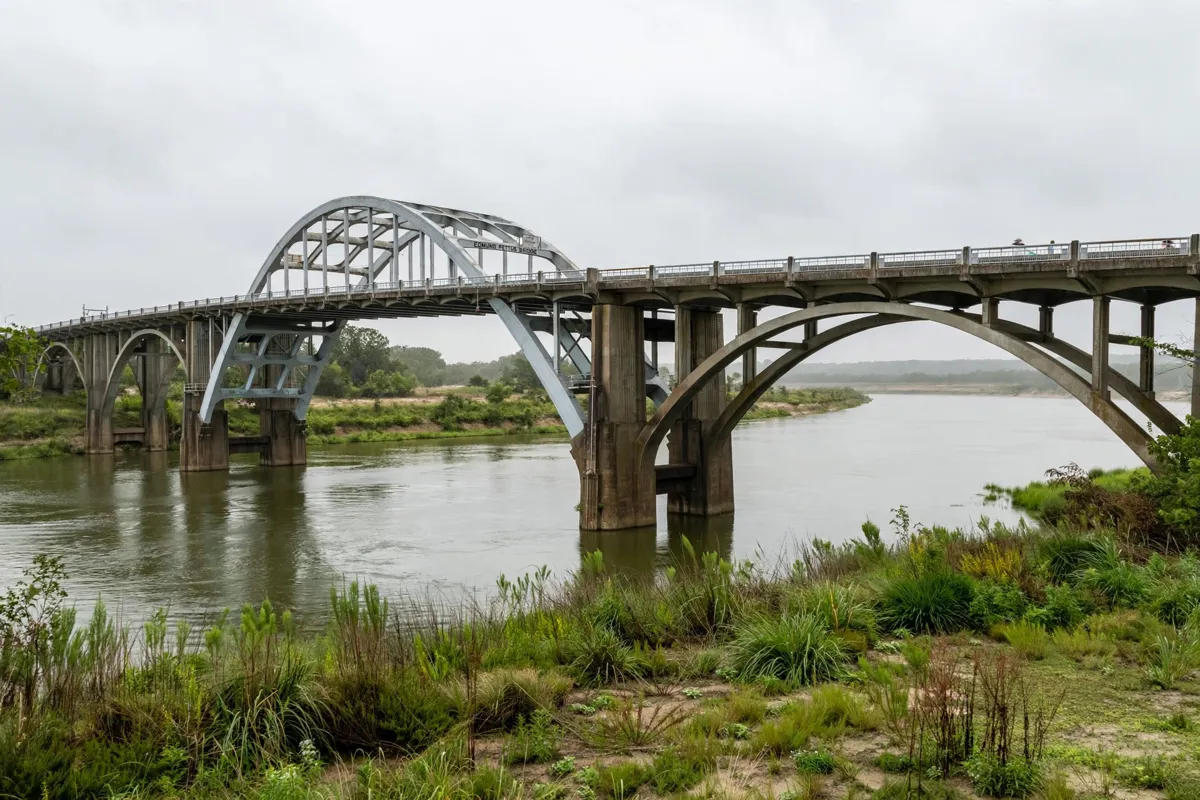
The bridge spans the Alabama River between Selma’s riverfront and downtown, carrying U.S. Highway 80 across the water. The Selma Interpretive Center stands at the foot of the bridge at 2 Broad Street.
The center serves as an introduction to the Selma to Montgomery National Historic Trail. The National Park Service says it opened on March 2, 2011, and has an interpretive exhibit and bookstore.
Why does the bridge matter in Selma?
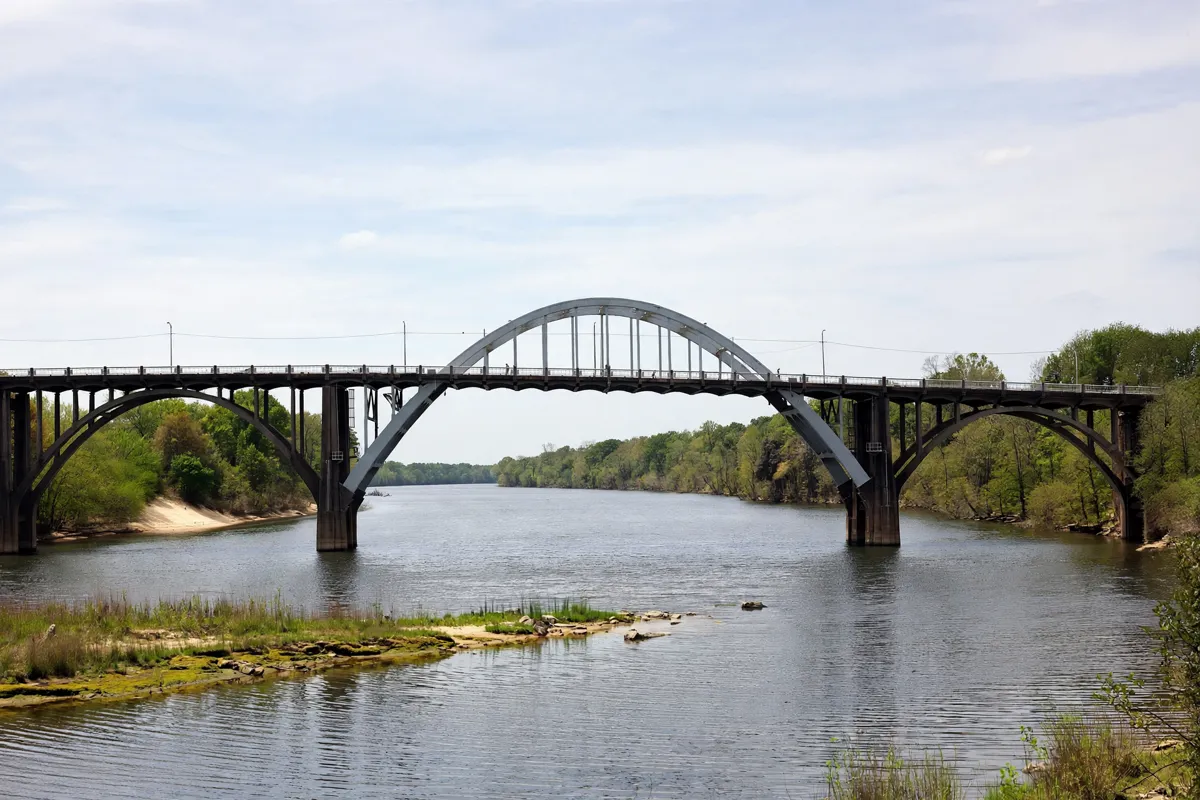
The Edmund Pettus Bridge became a defining site in the voting-rights movement after marchers were violently confronted by law enforcement there on Bloody Sunday.
On March 7, 1965, about 600 voting-rights marchers crossed the bridge and were met by law-enforcement personnel. The Selma-to-Montgomery march resumed on March 21, when 3,200 marchers crossed the bridge toward Montgomery. By March 25, the march had grown to 25,000 people at the Alabama State Capitol.
The National Park Service describes the bridge as a symbol of changes taking place in Alabama, the United States and the world during the voting-rights movement. The associated Selma-to-Montgomery National Historic Trail follows the route taken by the 1965 foot soldiers from Selma toward Montgomery and extends 54 miles.
What can you see at the bridge?
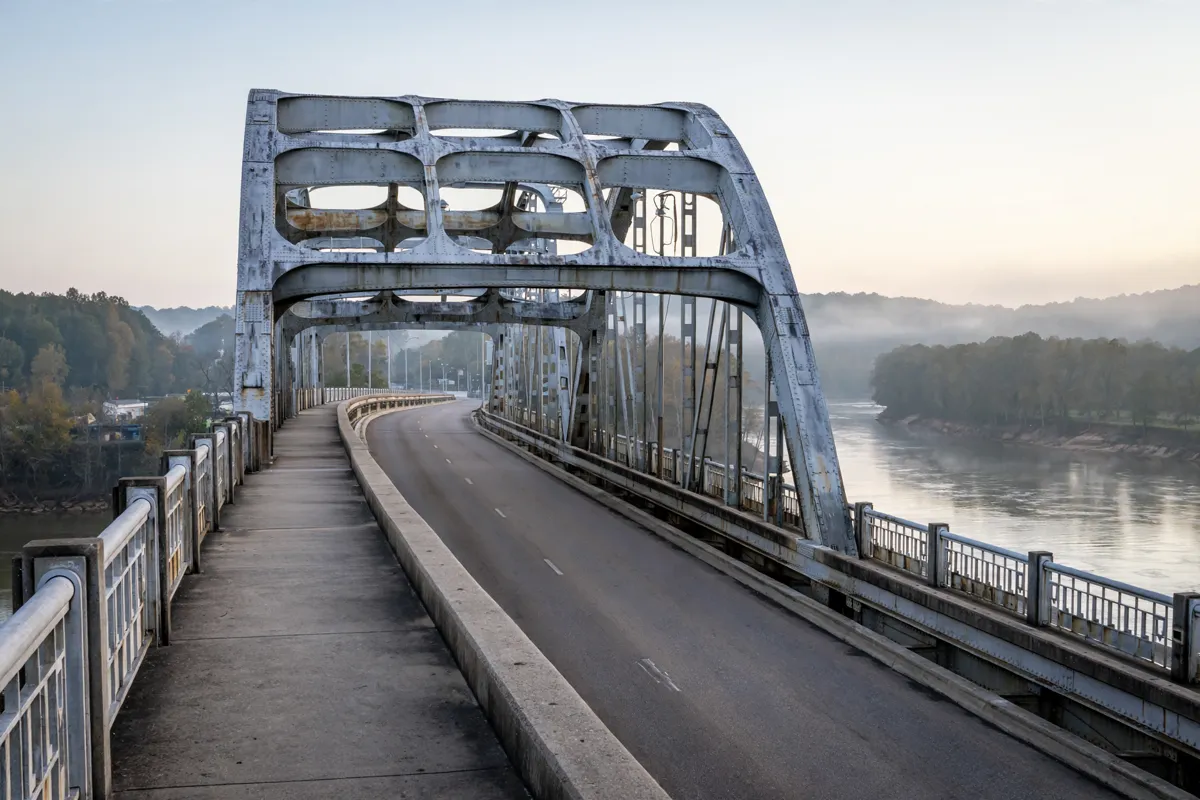
You can walk across the bridge on its sidewalks, but keep in mind that the structure remains an active, four-lane roadway. The sidewalks are curbed, with no guard rails separating pedestrians from oncoming traffic.
The National Park Service describes traffic as steady and high-volume, so expect road noise as vehicles pass. Visitors typically park in front of the Selma Interpretive Center and walk across the bridge. The center and crossing offer a way to connect the site itself with the wider trail route.
Allow enough time to stop at trail sites, cross the bridge and follow the historic route. The National Park Service does not give a specific visit duration, so how long you spend depends on how much of the trail and its stops you plan to include.
How do you get from downtown Selma to the bridge?
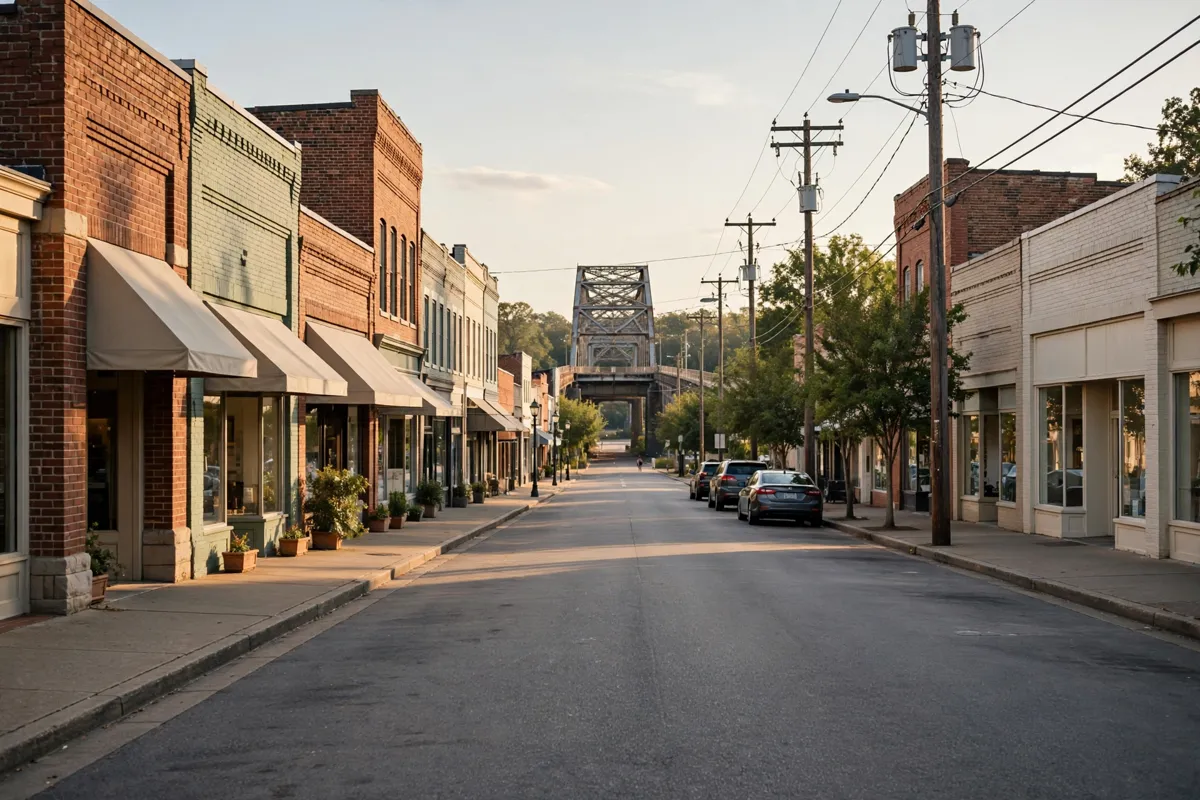
The bridge is about a four-minute drive from Luxury Inn & Suites, with rooms for a Selma visit.
Once you reach the Selma Interpretive Center at the bridge’s foot, the usual approach is to park in front of the center and walk across. Keep to the sidewalks and stay alert to passing traffic; the curbs do not form a barrier between pedestrians and vehicles.
Which civil-rights landmarks can you pair with the bridge?
Brown Chapel A.M.E. Church and the National Voting Rights Museum and Institute add important context to a Selma visit.
Brown Chapel A.M.E. Church, at 410 Martin Luther King Street, served as a staging point for the 1965 marches. The Martin Luther King Jr. Street Historic Walking Tour brings together 20 memorials, churches and wayside exhibits about Selma’s voting-rights movement.
The National Voting Rights Museum and Institute is at 6 U.S. Highway 80 East, across the bridge from the Selma Interpretive Center. Its exhibits include a Footprints Hall of Fame, a voting booth, a jail cell and Church, Legal and Obama galleries. You can build a broader Selma civil-rights landmark day trip around these sites.
Planning a respectful visit
Plan for the bridge as an active road and a place of historical significance: use the sidewalks, stay attentive to traffic and give yourself time to pause at the trail sites.
The broader route connects several places tied to Selma’s history. Other sites identified by the National Park Service include First Baptist Church, George Washington Carver Homes, the Slavery & Civil War Museum, the Old Depot Museum and the Smitherman Museum. For indoor exhibits alongside the outdoor landmarks, Selma’s history museums can help shape your itinerary.
Hours and access arrangements can vary, especially around commemorative events. Check the official site before you go for current visitor information.
FAQs
Can you walk across the Edmund Pettus Bridge?
Yes. The bridge has pedestrian sidewalks on both sides, but it remains an active four-lane roadway. The sidewalks have curbs but no guard rails between pedestrians and traffic.
Where is the Selma Interpretive Center?
It is at the foot of the bridge at 2 Broad Street and serves as an introduction to the Selma to Montgomery National Historic Trail.
What is the Selma-to-Montgomery National Historic Trail?
The 54-mile route follows the path taken by the 1965 foot soldiers from Selma toward Montgomery. The National Park Service recommends allowing time for trail stops and the bridge crossing.
How can you plan a day around Selma’s landmarks?
A one-day Selma itinerary can help sequence the bridge and other local sites.